Loading…
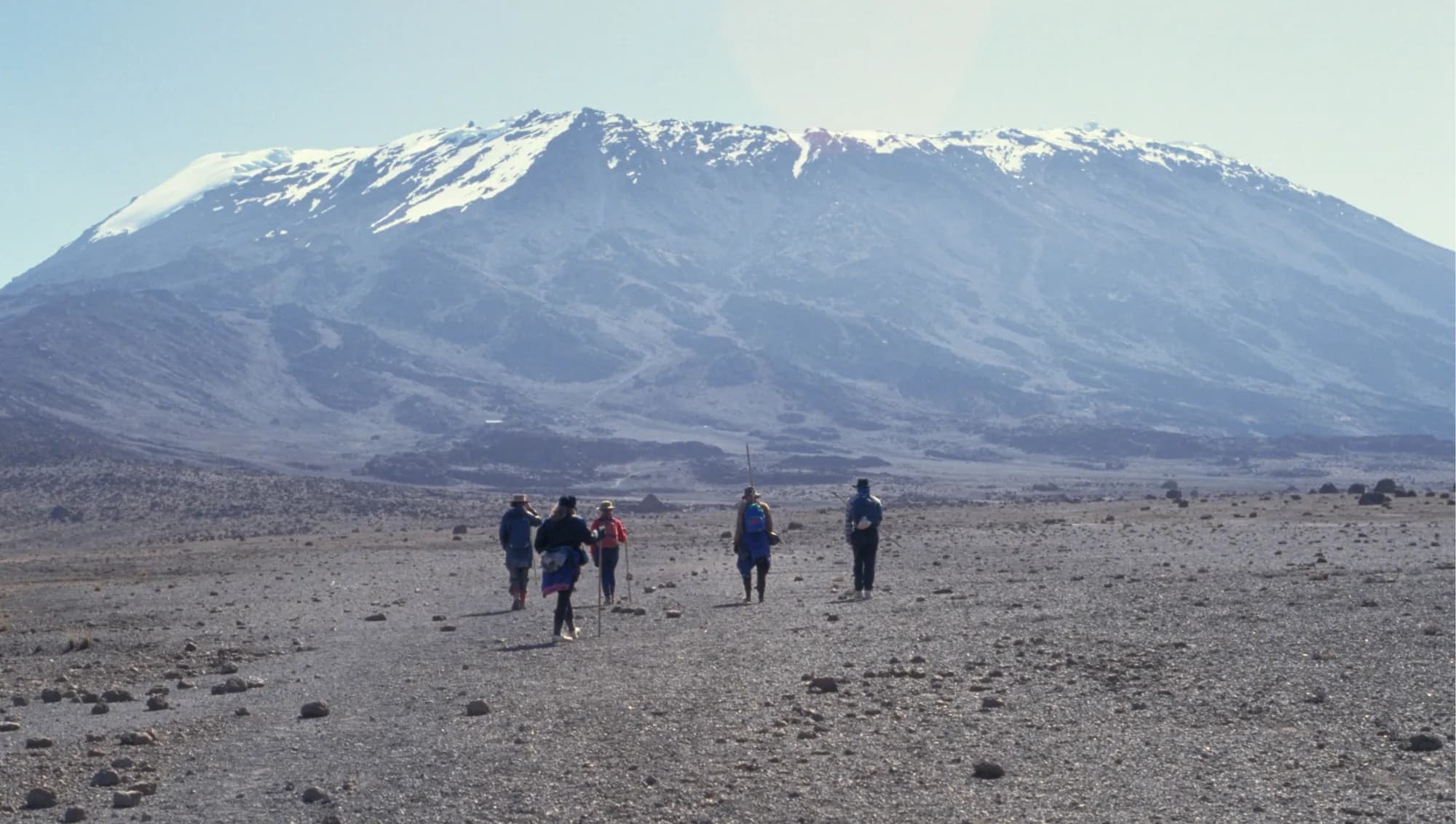 Final ascent · Barafu Camp to Uhuru Peak
— KILIMANJARO · 5,895M · AFRICA'S ROOFTOPThe mountain everyone wants.
The mountain everyone wants.
The climb we'd recommend.
Six routes. One summit. Choose by your time, your fitness, and your tolerance for crowds. We'll guide you the rest of the way.
5,895mSummit · Uhuru Peak
6Approach routes
87%Our 2024 summit rate
412Climbers led · 2018–2025
— Plan
Your honest chance of reaching the summit.
No mountain operator will tell you the unvarnished number. We will. Adjust the inputs below and we'll give you our best estimate based on 412 climbers we've personally led, plus published Tanzania National Park summit data.
— Your estimated summit probability
89%Excellent odds.
Acclimatization in your favour.
Acclimatization in your favour.
Your route choice and profile align well. Your body still has to actually respond to thin air — we'll see that on days 3 and 4 — but you've stacked the deck. Eat, hydrate, sleep, walk slow. We'll handle the rest.
Want to talk this through with a guide?Estimate based on KINAPA published 2019–2024 data and 412 climbers Savunda has personally led. Individual outcomes vary — fitness baseline matters less than acclimatization response. Not a guarantee.
— Choose · 02
Kilimanjaro route comparison: all six routes, side by side.
Each row links to a full route page with day-by-day itinerary, elevation chart, pricing, and what to pack. Crowds, scenery and difficulty rated on our internal 1–5 scale from years of guiding the mountain.
| Route | Days | Difficulty | Scenery | Crowds | Summit rate | From | Best months |
|---|---|---|---|---|---|---|---|
| ★ We recommend | 7 or 8 | 89% | $2,490/pp | Jan–Mar · Jun–Oct | |||
| Whiskey route | 6 or 7 | 85% | $2,180/pp | Jul–Oct · Jan–Feb | |||
| ★ Highest success | 9 | 95% | $3,290/pp | Jun–Oct · Jan–Mar | |||
| Drier north | 6 or 7 | 82% | $2,090/pp | Nov–Mar (driest) | |||
| Huts, no tents | 5 or 6 | 72% | $1,890/pp | Jun–Oct · Jan–Feb | |||
| ⚠ Advanced only | 6 | 61% | $2,240/pp | Jul–Sep only |
Difficulty Scenery Crowds (lower is better)Scroll horizontally on mobile · prices private climb, 2 pax minimum
Which Kilimanjaro route is right for you?
Highest summit rate: Northern Circuit (95%)
9 days, lowest crowds, circuits the whole mountain. The right answer if your only trip to Kilimanjaro must succeed — budget and time allow.
Best overall for most climbers: Lemosho (89%)
7–8 days, spectacular scenery, moderate crowds. Our default recommendation for fit first-timers with no extreme budget constraint.
Best value: Machame (85%)
6–7 days, the most popular route, shorter than Lemosho. Excellent success rate at a lower price — good if budget is a factor.
Drier season / north-face approach: Rongai (82%)
Approaches from Kenya via the drier north face. The right choice for November–March trips when the southern routes are wet.
Budget / hut accommodation: Marangu (72%)
The only route with hut sleeping — lower gear cost, lower price. Lowest summit rate of the main routes; the short day-profile is the cause.
Advanced climbers only: Umbwe (61%)
Steep, direct, extremely low acclimatisation profile. The lowest success rate on the mountain. We only offer this to experienced high-altitude trekkers.
Not sure? Book a free 30-min consultation — we'll match you to the right route in fifteen minutes.
— Operator standards · 03
Four things every Kilimanjaro climb should have. Many don't.
01 · KPAP
KPAP-partner porter welfare.
Porter loads weighed at the gate (cap: 20kg). Wages paid above the KINAPA legal floor. Tip transparency. Sleeping bags and waterproof boots issued — not bought from porters' meagre savings.
PARTNER ID · KPAP-TZ-2287 · ANNUAL AUDIT PASSED
02 · Medical
AMREF kits + oxygen daily.
Every Savunda guide carries pulse oximeter readings twice daily from day 3. Bottled oxygen + portable hyperbaric (Gamow bag) on every climb. Two of our guides are AMREF-certified wilderness first responders.
SpO₂ LOG · TWICE DAILY · ENTRY 04:00 SUMMIT NIGHT
03 · Ratio
Max 4 climbers per guide.
Some operators run 8:1 or worse — meaning the guide can't physically watch every climber on summit night. We cap at four. On private climbs we'll often run 2:1. The math matters at 5,500 metres in the dark.
2024 AVERAGE · 3.2 CLIMBERS PER GUIDE
04 · Buffer
Return-flight buffer day, included.
Built into every itinerary: a recovery day in Moshi or Arusha before your flight home. Showers, real food, swap stories. Push your flight one day later than you think — your summit-night legs will thank us.
+1 NIGHT · LODGE · NO EXTRA CHARGE
— Honesty · 04
Why we won't sell you a 5-day climb.
Five-day Marangu is the cheapest itinerary on the mountain. It's also the one with the highest failure and evacuation rate. The math is altitude, not effort.
From Marangu Gate at 1,860m to Uhuru Peak at 5,895m is more than four vertical kilometres. Your body needs days, not hours, to make more red blood cells. The guideline most high-altitude doctors agree on: above 3,000m, sleep no more than 500m higher than the night before. Five-day Marangu breaks that rule twice.
An extra day on the mountain — one more night between 3,700m and 4,200m — is the single largest predictor of whether you'll stand on the summit. Bigger than fitness. Bigger than age. Bigger than gear. We've watched it for fifteen seasons.
If budget is the only reason you're considering 5 days, talk to us. We'd rather route you to 6-day Rongai for $200 more than watch you turn back at Gilman's Point.
Further reading from our field journal: Acute Mountain Sickness — what we watch for · Pre-climb conditioning, by week · The summit-night decision tree.
— Climb + safari · 05Climb Kilimanjaro → safari → Zanzibar.
Climb Kilimanjaro → safari → Zanzibar.
The complete Tanzania.
Most climbers fly halfway round the world for the mountain alone. We think that's leaving 80% of Tanzania on the table. Three combinations our guests build most often:
Combo · 01 · The flagship
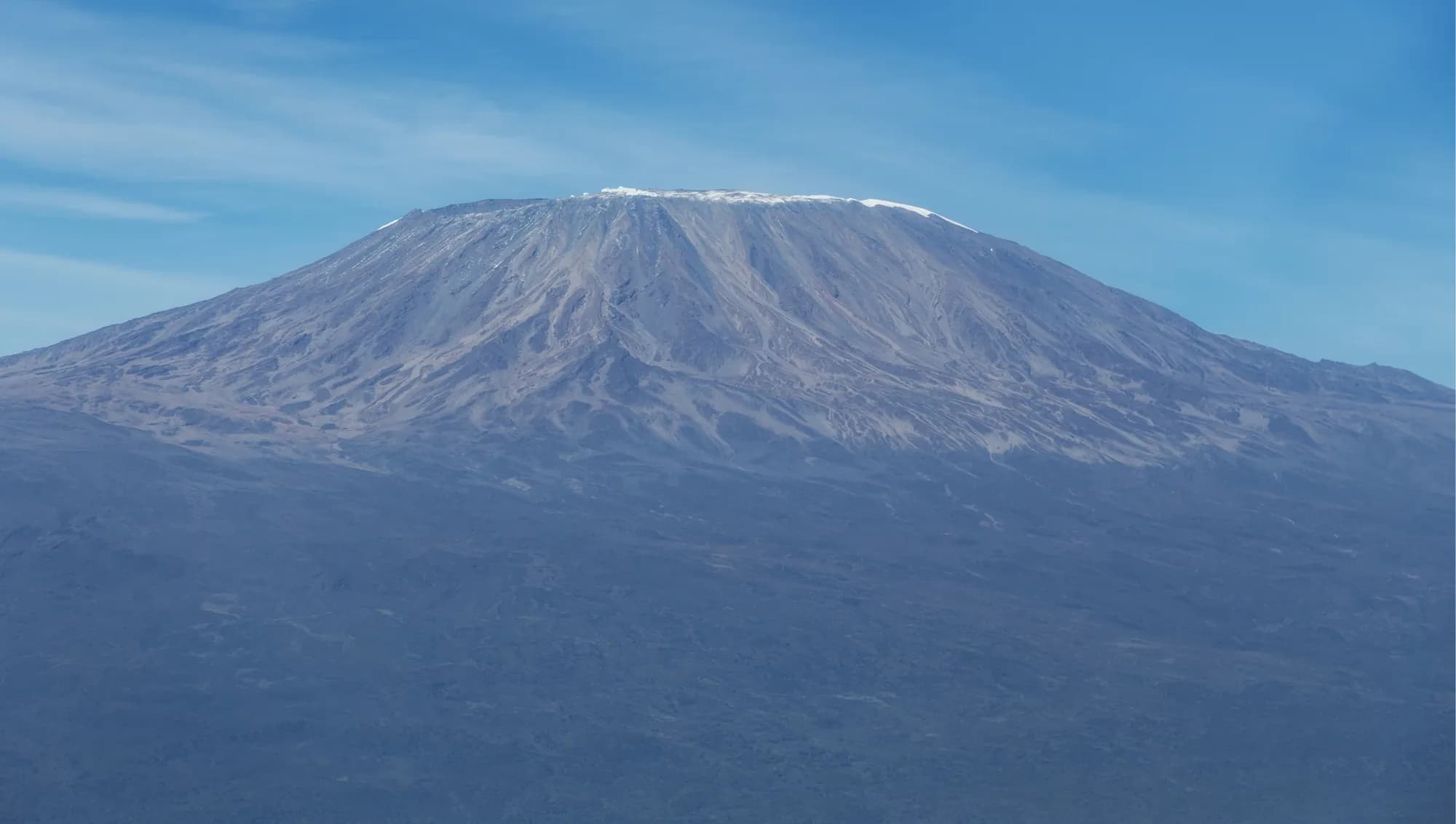
Lemosho 7 + 5-day Northern Safari
Climb · 7d→Rest · 1d→Safari · 5d
Stand on Uhuru, rest a night at our Moshi lodge, then drive west into Tarangire, Manyara, the Crater and Serengeti. Twelve days that earn the flight.
Combo · 02 · Premium
Northern Circuit 9 + 3-day Crater + Zanzibar
Climb · 9d→Crater · 3d→Beach · 4d
The longest climb for the highest odds, then a Crater-focused short safari and a swim. Sixteen days, soup to nuts. Recovery built in.
Combo · 03 · Tight schedule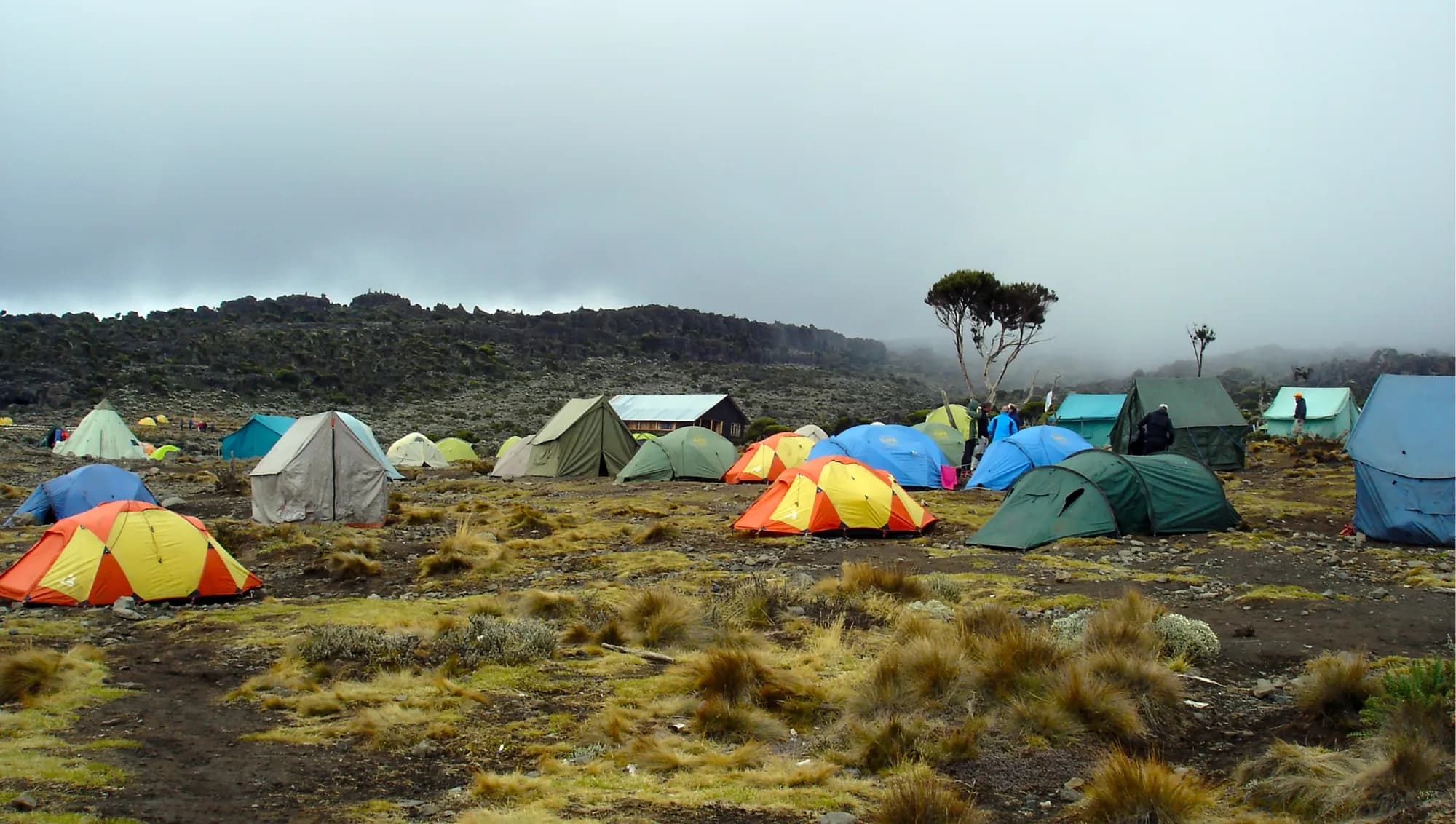
Machame 6 + 3-day Tarangire-Manyara-Crater
Climb · 6d→Safari · 3d
For when you have ten days off, not fourteen. The classic Machame plus our most popular short safari. Compressed but real.
— Questions we get · 06
Eight Kilimanjaro questions, answered honestly.
If you can walk 8 hours over rolling hills with a daypack, you're physically capable. Fitness matters less than people think on Kilimanjaro — what we can't predict is how your body handles thin air. Our oldest summiteer was 76. Our toughest non-summiteer was a 28-year-old triathlete whose body simply rejected altitude. Train for endurance, not speed: 4–6 hours of hiking on consecutive weekends in the 8 weeks before is more useful than any gym programme.
Some mild AMS symptoms — headache, poor sleep, loss of appetite — are normal above 3,500m and affect roughly 75% of climbers regardless of fitness. What we watch for is the escalation to HACE or HAPE, which is rare on properly-paced routes (Savunda 2018–2024: 4 evacuations in 412 climbers, zero fatalities). Our guides take SpO₂ readings twice daily from day 3 onward and have full authority to descend you if numbers head the wrong way.
Acetazolamide (Diamox) is the most studied altitude prophylactic and we generally recommend speaking to your doctor about a 125mg or 250mg twice-daily protocol starting the day before the climb. Side effects (tingly fingers, mild diuresis) are manageable. It's not a magic pill — it accelerates the acclimatization your body would do anyway — but for a one-shot summit attempt, the evidence supports it.
Better than you'd expect. Our chef carries fresh produce up daily from camps below — soup at every meal (critical for hydration), pasta or rice or ugali, real vegetables, fruit, eggs in the morning, hot ginger tea on tap. Loss of appetite is a real altitude issue from day 4; we pack high-calorie snacks (nuts, chocolate, biltong) for when nothing else appeals.
January, February, July, August, September and early October are the prime months — dry, clear, cold at night. June and late October are still good but transitional. April–May (long rains) and November (short rains) we generally avoid for everyone except experienced mountaineers who want quiet trails and accept wet camps.
Summit night between midnight and dawn is the cold bit: typically −5°C to −15°C with windchill. Lower camps are temperate. Pack like you're going winter mountaineering for summit night specifically — insulated boots, two pairs of socks, two pairs of gloves, balaclava, down jacket over a fleece. We rent quality gear in Moshi if you don't want to fly with it.
Yes — and not just any policy. You need explicit coverage for trekking up to 6,000m plus helicopter evacuation. We won't accept a climb booking without proof of policy. Companies our climbers have used successfully: Global Rescue, World Nomads (Explorer plan), True Traveller, and IMG Patriot. Read the altitude clause carefully — many standard policies cap at 4,500m.
You'll have walked through five climate zones and slept above the clouds. That's a serious week. We don't refund non-summits because the climb cost is fixed (park fees, porter wages, food) whether you reach Uhuru or turn back at Stella Point. What we will do: arrange your re-attempt at cost plus 20% if you come back within three years. Roughly 11 of our climbers have used that.
— Plan
Free 30-minute consultation with a guide who's summited Kilimanjaro 40+ times.
Tell us your dates, your fitness, your nervousness. We'll spend half an hour walking you through routes, packing, training, and the honest probabilities. No pressure to book — half the calls we take don't result in a climb that year. That's fine.